Why Your City Pages Aren't Ranking (And What to Do Instead)
You've got 30 pages on your website. "Plumbing Services in Fort Worth." "Plumbing Services in Arlington." "Plumbing Services in Mansfield." Every single one says the same thing with a different city name swapped in.
Your web agency sold you on this. They called it a "local SEO strategy." They might have even charged you per page. And I get the logic. If you serve 15 cities, you should have a page for each one, right?
Here's the problem: it almost never works anymore. I've audited over 200 small business websites at this point, and the sites running this playbook are some of the worst performers I see. Not just in page speed. In actual search visibility.
Let me explain what's happening and what actually works instead.
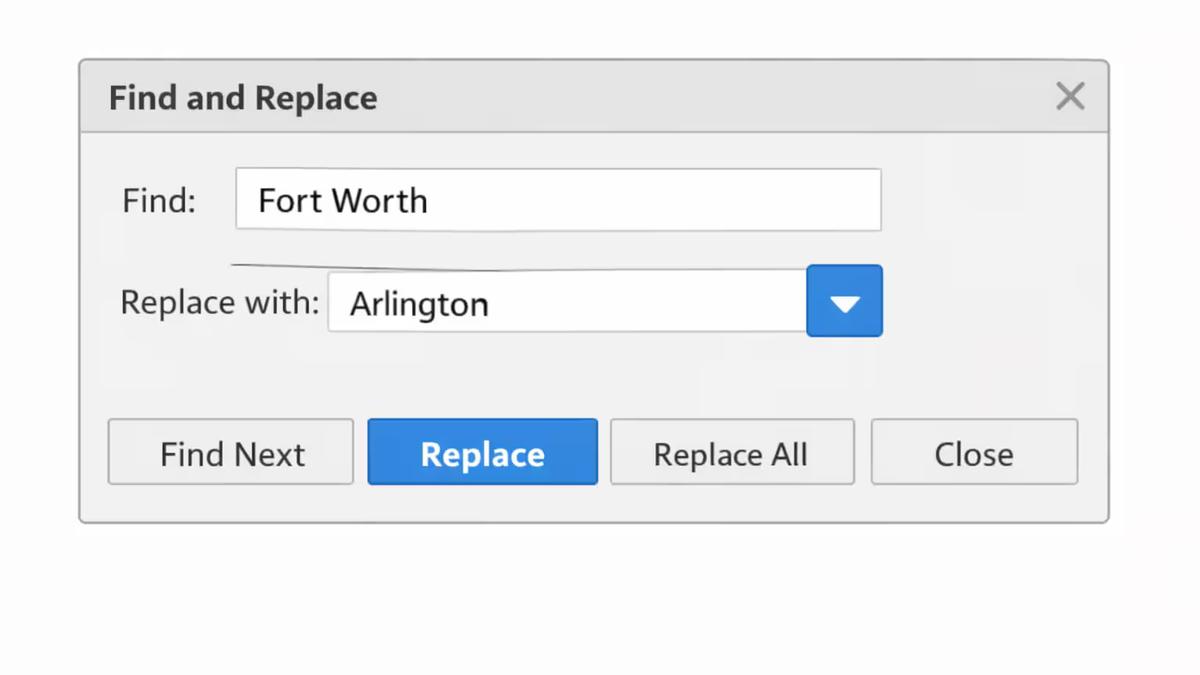
The Find-and-Replace SEO Strategy
The pattern is always the same. An agency or website builder creates one service page, then duplicates it 10, 20, sometimes 40 times. Each copy gets the city name swapped into the headline, the meta title, and maybe a line or two of body text. Everything else is identical.
This was a legitimate tactic around 2015. Search engines were less sophisticated, and having a URL with "/plumbing-services-arlington" could genuinely help you show up for that search.
That world is gone.
Google's systems now evaluate content quality across your entire domain, not just page by page. Their official documentation asks a pointed question that every business owner should consider: "Is the content mass-produced by or outsourced to a large number of creators, or spread across a large network of sites, so that individual pages or sites don't get as much attention or care?" City pages built from a template are exactly what that question is describing.
What Google Actually Does With Duplicate City Pages
Google doesn't technically "penalize" duplicate content in the way most people think. There's no manual action that shows up in Search Console saying "duplicate content violation." What actually happens is more subtle and, honestly, more damaging.
When Google finds multiple pages on your site with nearly identical content, it runs a deduplication process. It clusters all the similar URLs together, picks the one it considers most authoritative, and filters the rest out of search results. Your 30 city pages don't give you 30 chances to rank. They give you one. Maybe.
But it gets worse. Google's September 2025 spam update specifically targeted websites that relied on repetitive, cookie-cutter content across multiple pages. Businesses with location landing pages that used identical templates across different cities were flagged for lacking originality. If the structure, headings, and content are all the same, Google can't differentiate these pages, and it stops trying.
The real damage shows up in three ways:
Your pages compete against each other. When multiple pages on your site target similar keywords, none of them build enough authority to rank well. Instead of one strong page, you end up with a dozen weak ones splitting whatever link equity and engagement signals you have.
Your crawl budget gets wasted. Google allocates a limited amount of resources to crawling your site. If it spends that budget discovering and processing 30 near-identical pages, your actually important content might not get crawled as often or as quickly.
Your whole site can lose credibility. Google's helpful content system operates as a site-wide signal. Having a large number of thin, duplicated pages can drag down the rankings of your genuinely useful pages. The system evaluates your domain as a whole, and a bunch of low-value city pages tells Google that your site prioritizes search engines over people.
Why Agencies Still Sell This
This is the part that frustrates me. Agencies keep selling city page packages because they're easy to produce and easy to justify to a client who doesn't know better.
Think about it from the agency's side. They can charge $100 to $200 per page, spin up 20 of them in an afternoon with find-and-replace, and the deliverable looks impressive. "We built you 20 new landing pages targeting your service area!" The client feels like they got value. The agency padded the invoice. Everyone's happy until the pages don't rank and nobody can explain why.
Some agencies genuinely believe this still works. They learned SEO in 2016 and never updated their playbook. Others know it doesn't work but sell it anyway because the client won't know the difference for months. By then, the contract is signed and the retainer is locked in.
Either way, you're the one paying for pages that are actively hurting your site.
What Actually Works for Multi-City Visibility
If you serve multiple cities, you absolutely should communicate that to potential customers. But the approach matters. Here's what I recommend based on what I've seen work in practice.
One strong service page with a clear service area
Instead of 30 thin city pages, build one authoritative service page that clearly states which areas you serve. List every city. Include a service area map if you can. Make the page genuinely useful with real details about your services, your process, your pricing structure, and what makes you different.
One page with 1,500 words of real, substantive content will outperform 30 pages with 200 words of recycled copy every single time.
Location pages only where you have something real to say
If you actually have a physical presence, completed projects, or specific knowledge about a city, a dedicated page can make sense. But it needs to be genuinely unique. That means:
- Real photos from jobs you've completed in that area
- Specific details about working in that city (permitting requirements, common building styles, local regulations)
- Testimonials from actual customers in that location
- Information about the neighborhoods or communities you serve there
If you can't fill a page with content that would be useful to someone specifically searching in that city, you don't need that page.
Google Business Profile and the map pack
Here's what a lot of business owners miss: for local "near me" searches, the Google Map Pack (the three local results with the map at the top) drives most of the clicks. Those results are powered by your Google Business Profile, not your city pages.
A well-optimized Google Business Profile with accurate information, regular posts, photos, and reviews will do more for your local visibility than 50 city pages ever could. If you serve multiple areas from one location, your GBP service area settings handle the geographic targeting.
Content that demonstrates local expertise
Instead of a page that says "We provide roofing services in Cleburne" and then repeats the same copy from your Fort Worth page, write a blog post about a specific roofing project you completed in Cleburne. Talk about the hail damage patterns in that area. Reference the local building codes. Show that you actually know the community.
This kind of content is impossible to fake and impossible to duplicate. It's the exact thing Google is looking for when it evaluates whether your site demonstrates real experience and expertise.
How to Fix a Site That Already Has These Pages
If your site currently has a stack of duplicate city pages, here's what I'd suggest:
Audit what you have. Look at each city page in Google Search Console. Check which ones are actually indexed, which ones are getting impressions, and which ones are getting clicks. Chances are, most of them are doing nothing.
Consolidate. Take the best-performing page (if there is one) and make it your primary service page. Add your full service area to it. Make it the one page that covers your geographic reach.
Redirect, don't just delete. For the pages you're removing, set up 301 redirects pointing to your consolidated service page. This preserves any link equity those pages may have accumulated and prevents 404 errors.
Build real content over time. If certain cities are important to your business, invest in creating genuinely unique content for those areas. One real page per quarter is worth more than 20 template pages launched all at once.
The Bottom Line
The duplicate city page strategy is a relic from a simpler version of the internet. It persists because it's cheap to produce and easy to sell to business owners who trust their agency to know what works.
If your website has these pages, they're probably not helping you rank. They might be actively hurting you. And the agency that built them almost certainly isn't going to tell you that.
I'd rather build you one website that actually performs than 30 pages that sit in Google's recycling bin. If you want to see how your current site stacks up, run a free audit and find out where you stand.
Other articles of interest
SEO for Small Businesses
Your Marketing Promised You SEO. Did They Check If The Site Actually Loads?